Speakers move air. Amplifiers push speakers. Neither understands numbers, so somewhere between your streamer or computer and the amp, digits have to become voltage. That conversion is the DAC's whole job.
What "digital" means here is concrete: a CD stores the shape of the sound wave as 44,100 numbers per second, each 16 bits deep. Fine-grained enough that the wave can be rebuilt exactly. The DAC does the rebuilding, continuously, while music plays.
Built in, or on its own
- In the source: phones, laptops, TVs and Blu-ray players all have one.
- In the amplifier: anything with USB, optical or coax inputs has one behind that socket.
- As a separate box, fed by USB or optical from the source and feeding the amp with analogue cable.
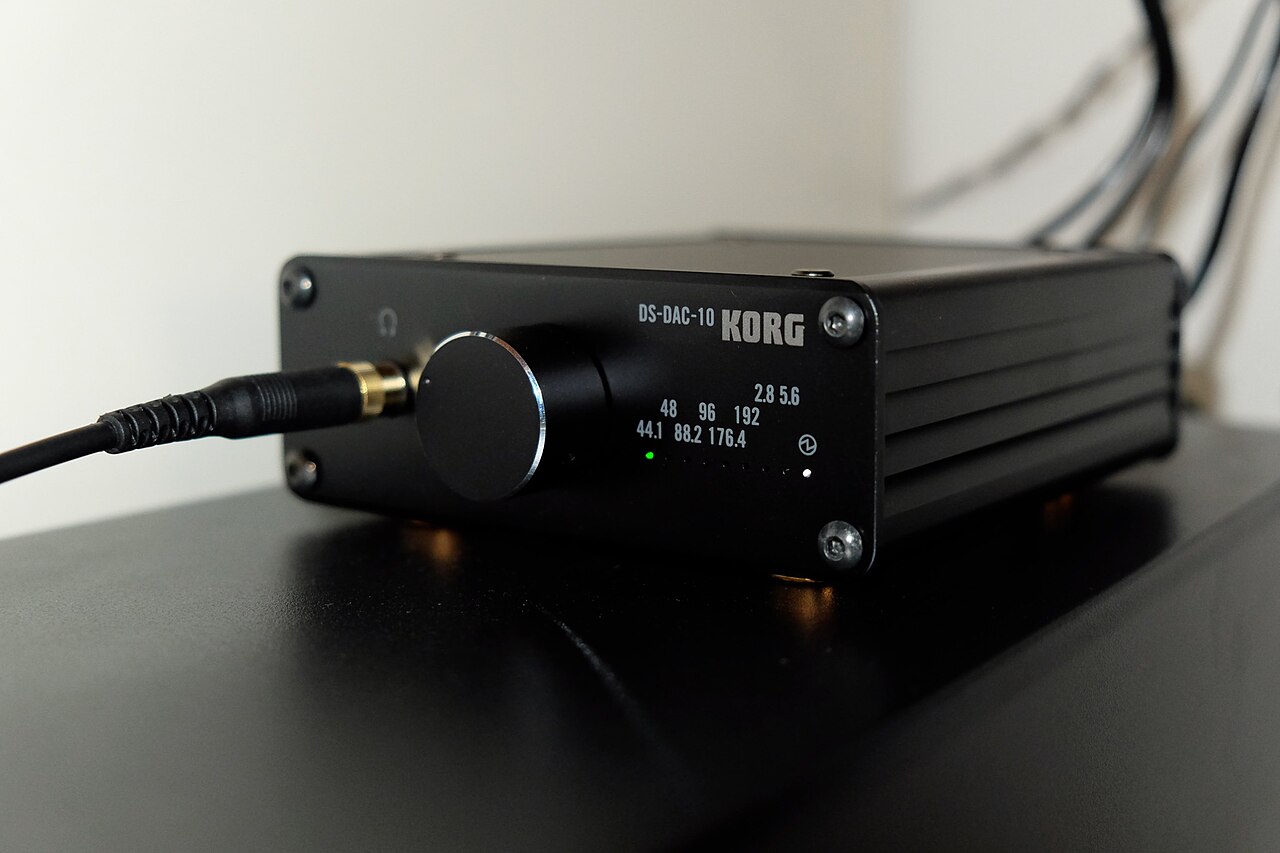
When a separate DAC earns its shelf space
- Your source has no analogue output at all, like a modern TV with only HDMI and optical.
- The built-in one is genuinely bad: hiss, whine from a computer's power supply, noise riding in over USB.
- You need an input or output the rest of the chain doesn't have.
Where it sits in the pecking order
DACs are mature technology, and the gap between a competent one and an expensive one is small next to everything else in the chain. With a fixed budget, spend in this order: speaker placement and the room (free), then speakers, then amplifier, then source and its DAC. Follow that order and you'll never have to talk yourself into a DAC purchase.