Two problems make turntables the odd one out among your sources, and a phono stage solves both.
The signal is tiny
A moving-magnet cartridge outputs a few thousandths of a volt. Everything else on your shelf outputs about a volt, what's called line level. Plug a turntable into a regular input and the amplifier gets a whisper where it expected a shout. You'll hear something at full volume, but weak and noisy.
The record isn't cut flat
Cutting bass straight into a vinyl groove would need grooves so wide you'd get ten minutes a side. So bass is cut and treble is boosted when the record is made, and the phono stage puts it back on playback. That correction is the RIAA curve, and skipping it is exactly what a missing phono stage sounds like: thin, then shrill.
The usual hiding places
- Behind any input labelled PHONO on an amplifier.
- Inside many modern turntables; look for a PHONO/LINE switch.
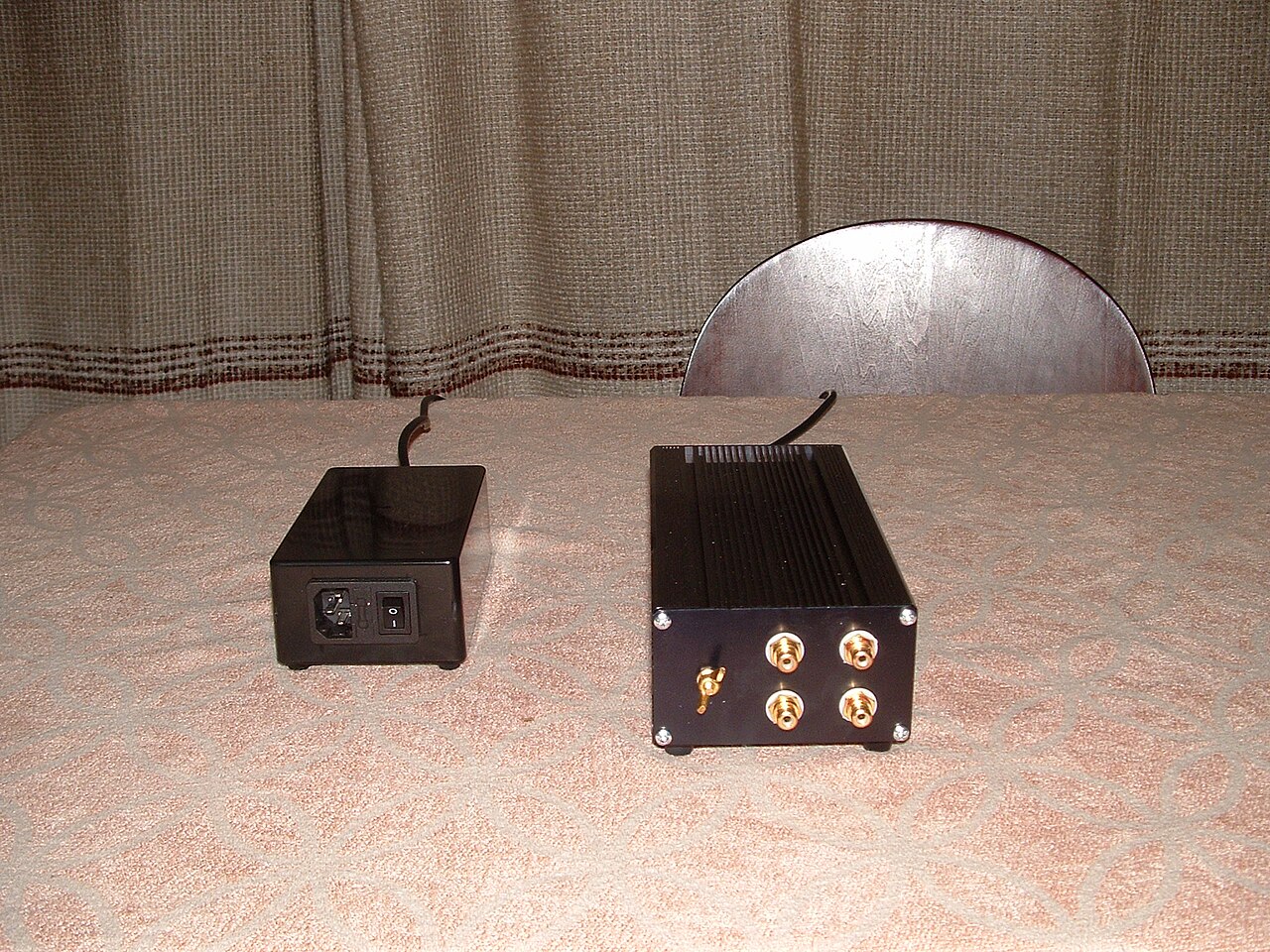
- As a separate box: turntable, phono stage, any line input.
All three do the same job. A separate box just lets you spend more and match the booster to the cartridge. For the wiring decisions, see Can I connect a turntable directly to my amplifier?