It depends what's on the back of your amplifier, so start there. Flip it around and have a look.
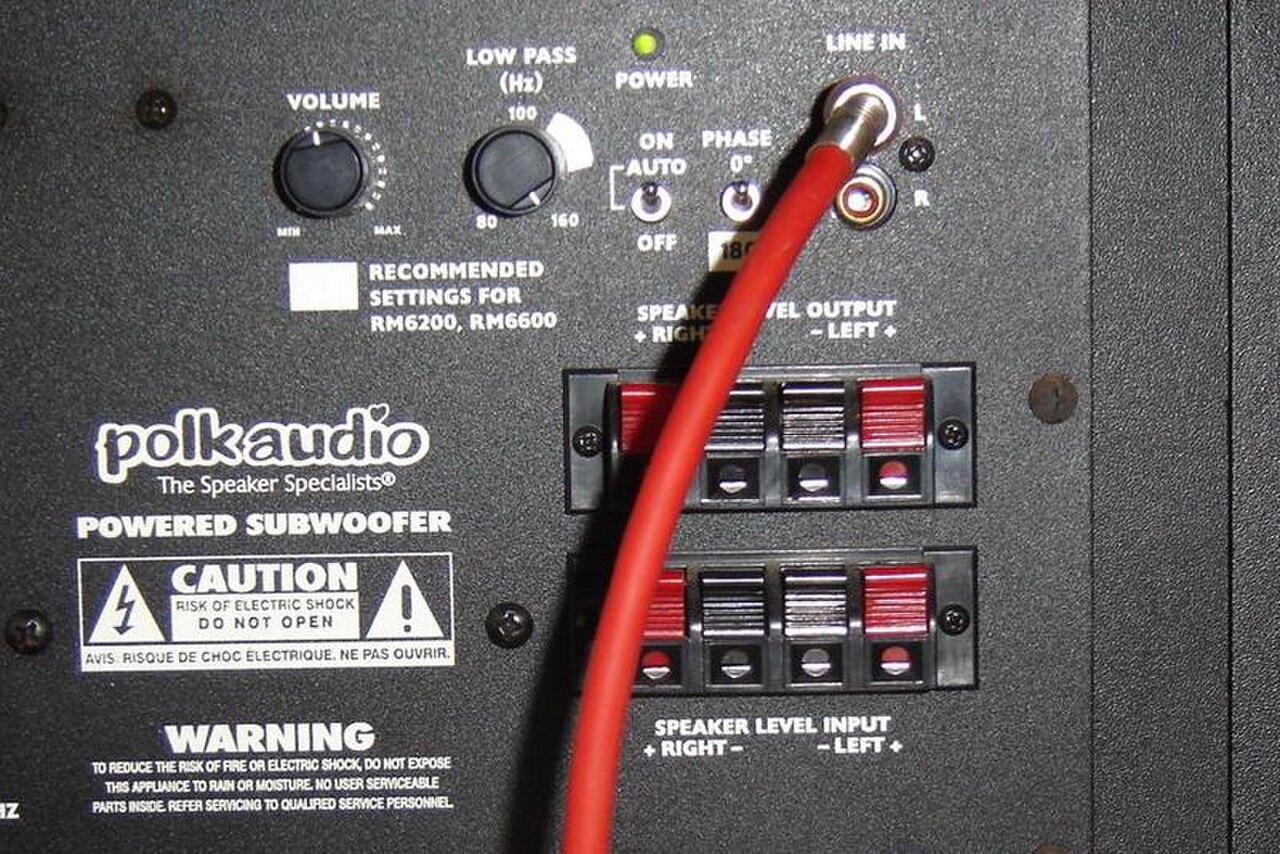
If you have a pre-out or sub-out
Lucky you. Run a single RCA cable from that output to the sub's line input and you're done. The sub has its own amplifier inside, so yours barely notices it's there.
If you don't, which is the usual case
Almost every subwoofer also accepts speaker wire. Run a second pair of cables from your amplifier's terminals to the sub's speaker-level inputs, alongside the wires going to your speakers. The sub listens in on the same signal and draws essentially no power itself. Keep plus to plus and minus to minus, and hook up both sides: a sub needs left and right to hear the bass properly when there's no dedicated sub output.
A sub only handles the deepest tones, roughly the bottom two octaves of music, from about 20 to 200 Hz. That's why the connection part is simple and the setup dials matter more.
Setting the dials
Crossover first: it picks the handover point where the sub takes over from your speakers. Start around 70 Hz; small speakers want it higher, up to about 100 Hz. Then level: turn it up until the bass gets obvious, and back off a touch. A sub you notice all the time is too loud.
The phase switch stays at 0 to start. If the bass feels thin around the handover point, try 180 and keep whichever position gives you more bass.
Before you blame any of those dials, move the sub. Deep bass is hard for the ear to locate, which is a gift: a corner sounds boomy, a position further into the room sounds tighter. Half an hour of shuffling it around beats an evening of tweaking.