A turntable is a mechanical machine, and small setup errors turn into audible problems. Work through these in order and don't shortcut.
Level it first
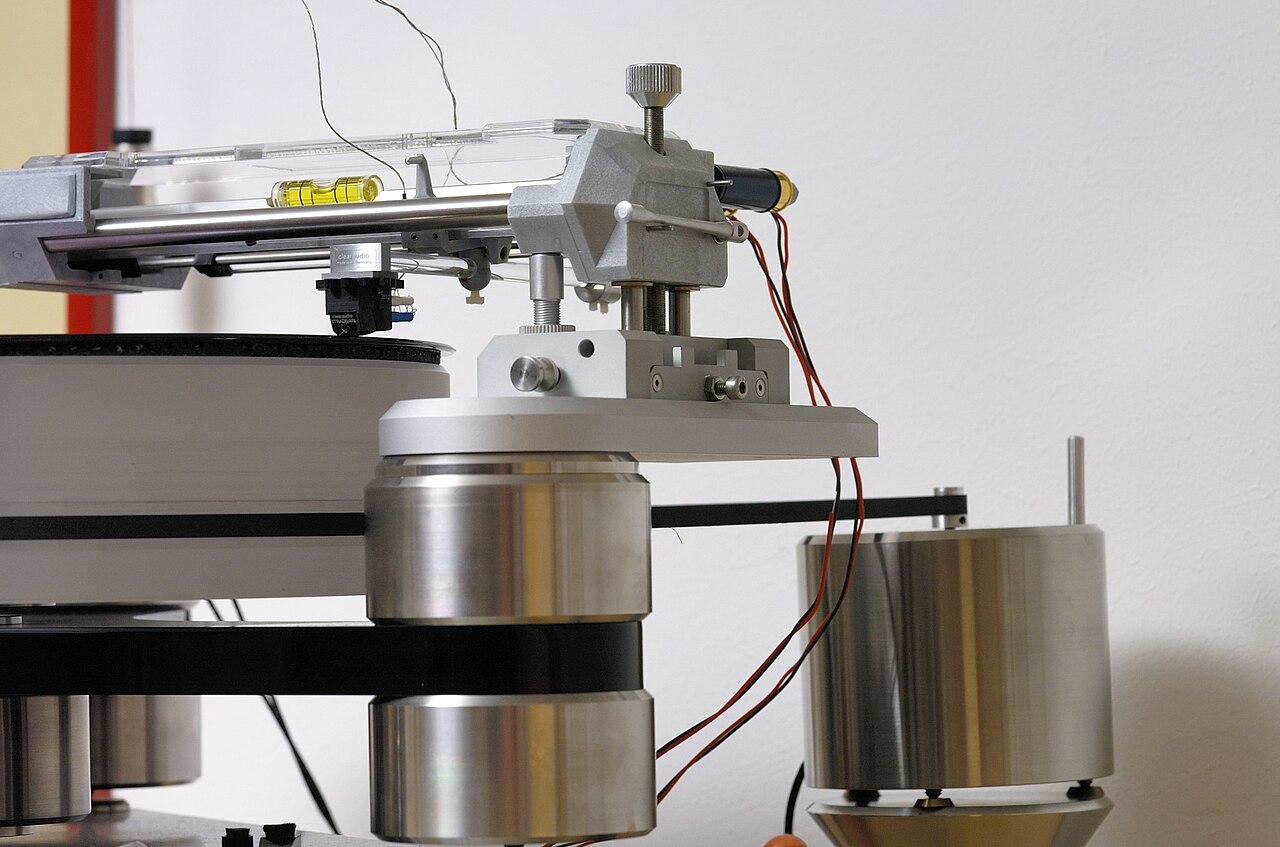
A small spirit level on the platter, checked corner to corner and then front to back. If the shelf slopes, everything downstream misbehaves slightly. It costs nothing and fixes real problems, which makes it the best five minutes in turntable ownership.
Balancing the arm
Turntable off, stylus guard on if you have one. Rotate the counterweight until the arm floats horizontally, neither dipping nor rising. That's your zero.
Tracking force and anti-skate
Your cartridge has a recommended range, printed on the body, the box or the manual, and typical numbers land between 1.5 and 2.5 grams. Set the dial on the counterweight to the middle of the range. Too light and the tip skips around in the groove, which damages records. Too heavy and you wear out the record and the tip faster.
Anti-skate counteracts the arm's tendency to drift inward. Set it to the same number as the tracking force, then adjust by feel: drifting inward when lowered onto a record means add a touch, drifting outward means take some off.
Belt and speed
A stretched belt makes pitch wander, which people usually first notice on long piano notes. The belt's other job is soaking up motor vibration so the stylus never hears the motor, and old belts do that worse too. Belts are cheap; replace yours every few years even if nothing sounds wrong yet.
The last few percent
Cartridge alignment, azimuth, vertical tracking angle: refinements, not prerequisites. A well-balanced arm at the right force beats a perfectly aligned cartridge at the wrong one, every time. When you do want the last percent, a printed alignment protractor matched to your arm's geometry gets you there for pocket change.