Passive speakers get their power from the amplifier through plain copper wire. There's no cleverness in the cable to get right, which is also why there's nothing worth overpaying for.
Thickness and length
Longer runs want thicker wire, because thin wire adds resistance the amp has to shove through:
| Cable length | Comfortable thickness |
|---|---|
| Up to ~3 m | 1.5 mm² (16 AWG) |
| Up to ~6 m | 2.5 mm² (13–14 AWG) |
| Longer runs | 4 mm² (11–12 AWG) |
Wiring them up
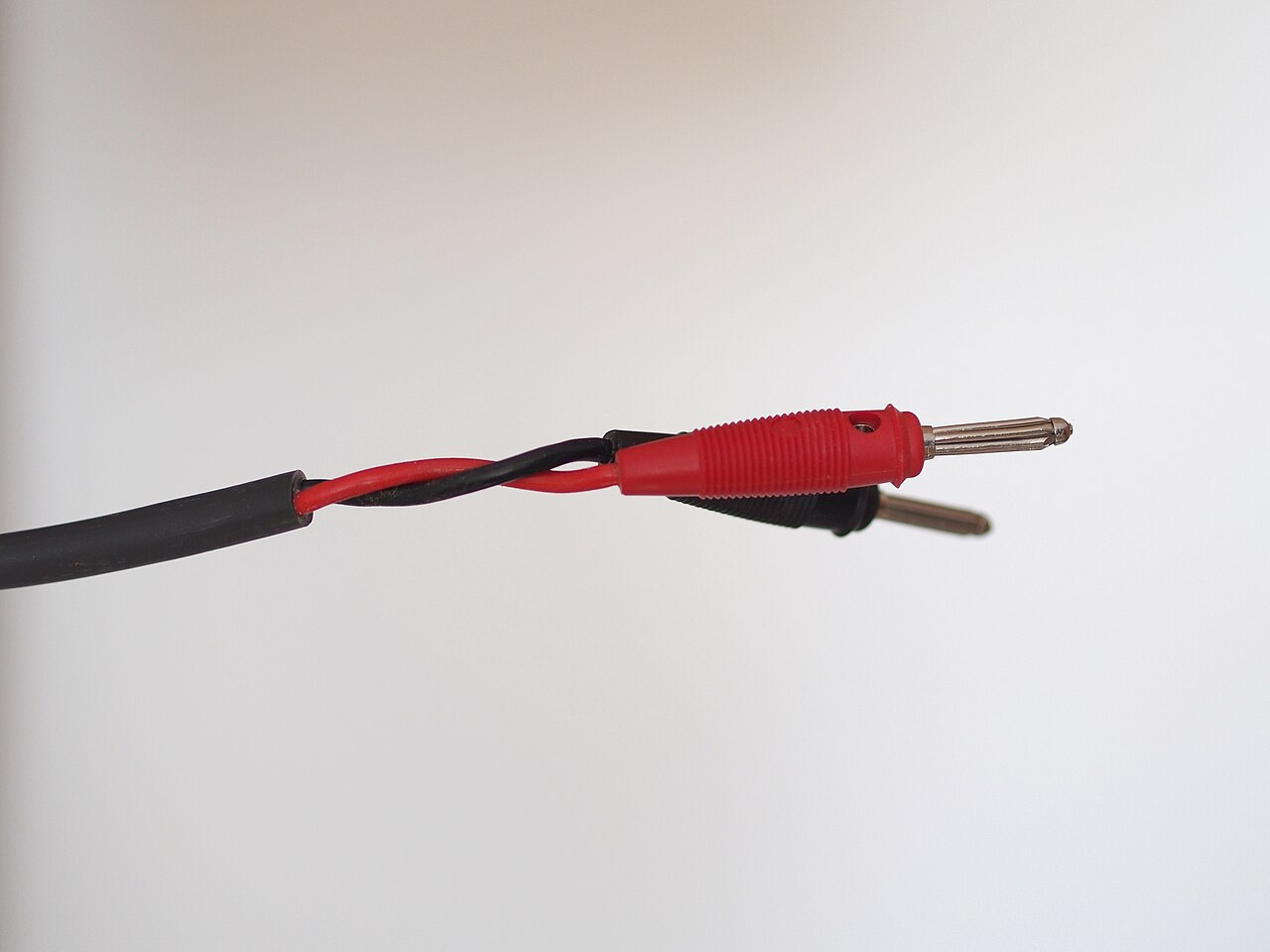
Most cable marks one core with a stripe or a ridge. Use it as your plus on both ends and you can't get lost. Bare wire into the terminals is perfectly fine; banana plugs are a convenience, not an upgrade.
Swap plus and minus on both speakers and nothing bad happens. Swap one and not the other, and the two speakers push air in opposite turns so the bass mostly cancels. A hollow, bass-less sound from a healthy system is almost always this, and it takes thirty seconds to fix.
On expensive cables
Any competently made copper wire of the right thickness does the job. This is the least audible place to spend money in the entire system, so spend it on speakers or records instead.